How many calories do you burn rucking: realistic estimates
Rucking is walking with load and it changes your calorie burn compared to unloaded walking. Base variables include body weight, external load, pace, terrain, and duration. Small changes in any variable create meaningful differences in energy expenditure. This guide gives practical estimates, examples, and a single calculator you can use to get a specific number for your body and ruck.
How calorie burn scales with load and pace
At the same walking pace, adding weight increases the metabolic cost. A common rule of thumb is that adding 10 percent of your body weight increases calorie burn by roughly four to eight percent depending on intensity and terrain. Faster paces raise the baseline burn so the absolute increase from load is larger when you move quicker. Hills, soft ground, and frequent stops also increase work and total calories.
Quick reference examples
- 150 lb person walking 3 mph unloaded: about 240–300 kcal per hour.
- 150 lb person with 20 lb vest at 3 mph: about 280–350 kcal per hour.
- 200 lb person with 40 lb ruck at brisk pace: 500–650 kcal per hour depending on terrain.
These are broad ranges. Your exact burn depends on fitness, gait, and equipment fit. Use the calculator below for an individual estimate based on your weight, load, pace, and duration.
Calculate your burn
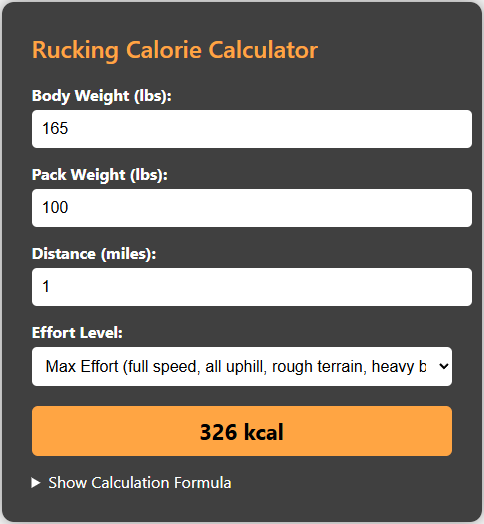
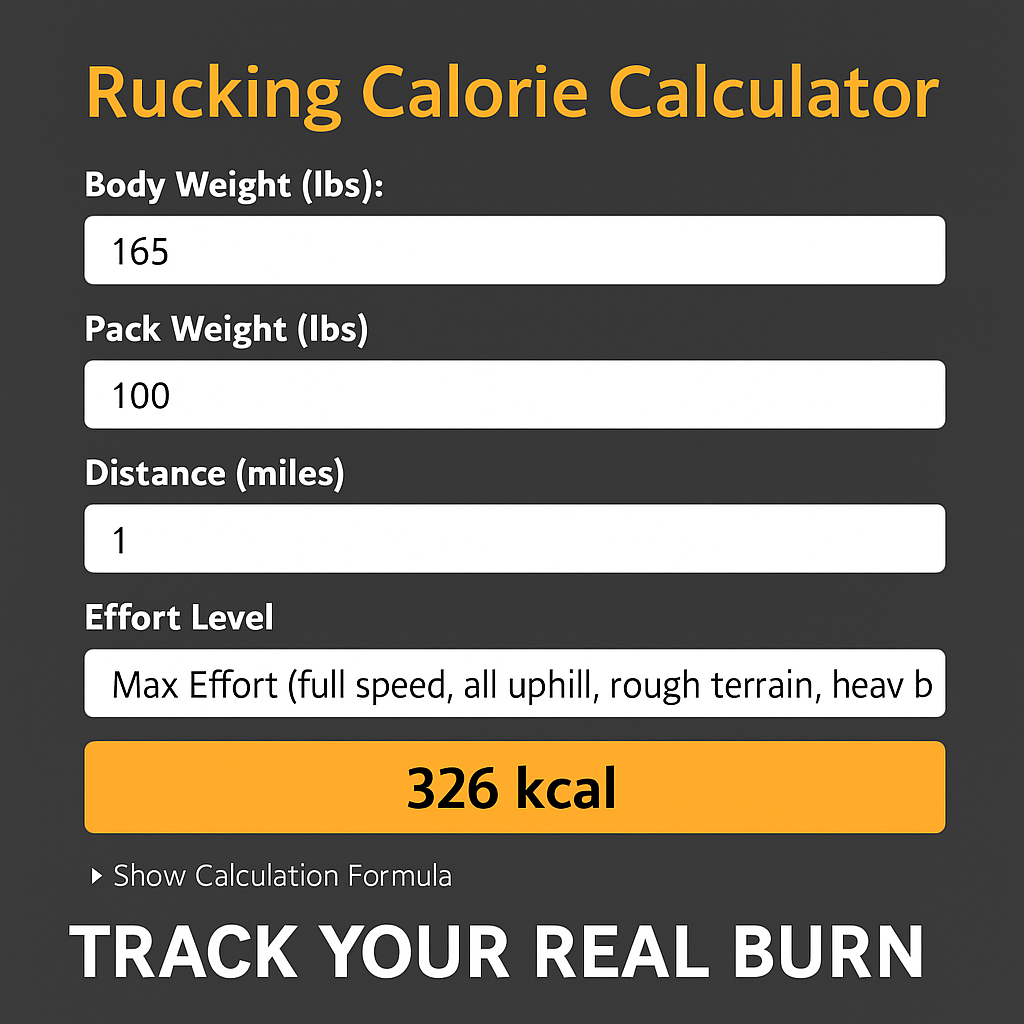
Try the Rucking Calorie Calculator linked and screenshot below to get a personalized figure.

Rucking app for Android
For Android users the Rucking app on Google Play lets you track ruck sessions, log weighted vest work, and calculate calories burned. It includes a weight loss calculator option and gear links. Tap the app image to open the Play Store.

Hydration and longer rucks
Hydration affects perceived exertion and practical performance. For long rucks consider a CamelBak Motherlode 100oz Mil Spec Crux Hydration Backpack or similar to carry fluids and mix endurance electrolytes. During hot conditions, consume fluids proactively and incorporate salty snacks. Preston uses Pump-Ocalypse on longer walks for sustained hydration and electrolyte support.

Choosing gear
For long-distance rucks a ruck or plate carrier distributes weight and improves comfort. For day-to-day weighted vest training choose a vest with adjustable plates and comfortable straps. Here are two recommendations to cover common needs.
For long rucks consider the GORUCK Rucker 4.0 20L for durable load carriage.

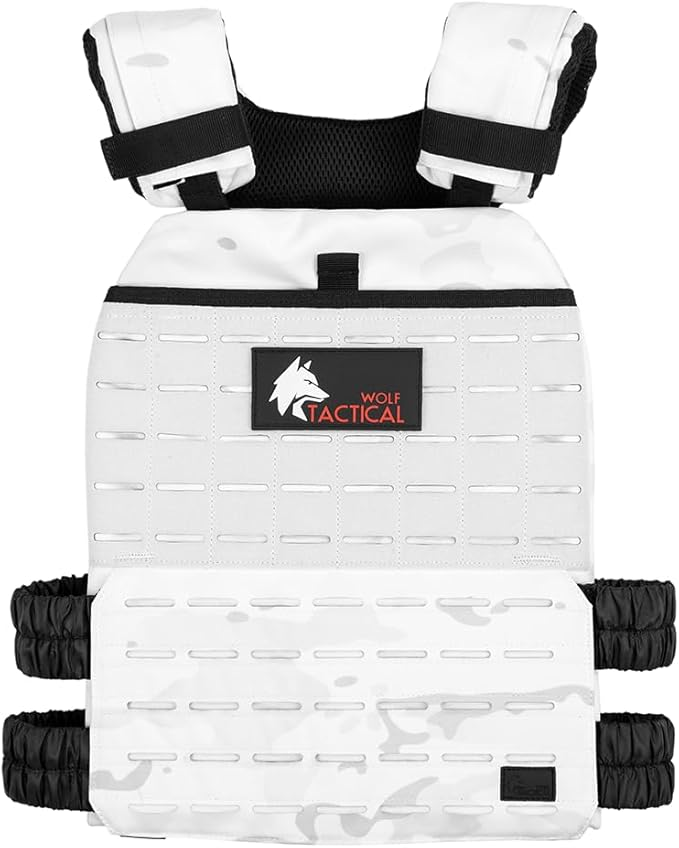
For comfortable vest-based daily rucking pick the Wolf Tactical Simple Weighted Vest.

Practical pacing and planning
Start conservatively with load and time. If new to rucking, carry light weight for short sessions and increase load 5–10% per week. Track your heart rate and perceived exertion rather than chasing numbers regularly. Rucking frequently at moderate intensity builds endurance and reliably increases daily calorie burn.
Example training week
- Two rucks of 45 to 60 minutes at moderate pace with a 10 to 20 percent bodyweight vest.
- One long slow ruck 90 to 150 minutes at conversational pace with lighter load.
- Strength day with vest for 30 to 45 minutes of bodyweight and loaded carries.
- Active recovery or rest day, mobility and hydration focus.
Use the calculator and track progress
Record sessions, adjust weight slowly, and use the calculator linked earlier to convert your sessions into estimated calories. The Rucking app on Google Play syncs session details and gives quick estimates when you enter weight, load, pace and duration.
Final takeaways
Rucking is an efficient way to increase calorie burn with practical gear and simple planning. Start light, track numbers, prioritize hydration, and use the calculator to dial in your personal numbers. Over weeks and months consistent rucking yields steady increases in total daily energy expenditure and supports sustainable fat loss.
Frequently asked questions
Will rucking help me lose weight?
Yes. Rucking creates a caloric deficit when paired with appropriate nutrition. It preserves lean mass better than steady-state cardio because of the load and can be scaled to maintain progression. Regular sessions and modest dietary control produce lasting results.
How often should I ruck?
Begin with twice weekly and build to three to four sessions for best endurance and calorie effects. Mix one longer slower ruck with shorter, slightly faster efforts. Listen to recovery cues and reduce load if joint pain develops. Progression is gradual and sustainable gains beat intermittent extremes.
Can I ruck with a weighted vest instead of a pack?
Absolutely. Weighted vests are convenient for shorter sessions and controlled loading. Choose a vest that fits well and allows plate adjustment. For longer technical rucks a ruck or plate carrier improves comfort and load distribution. Use both approaches depending on goals.