Rucking calorie calculator for hills
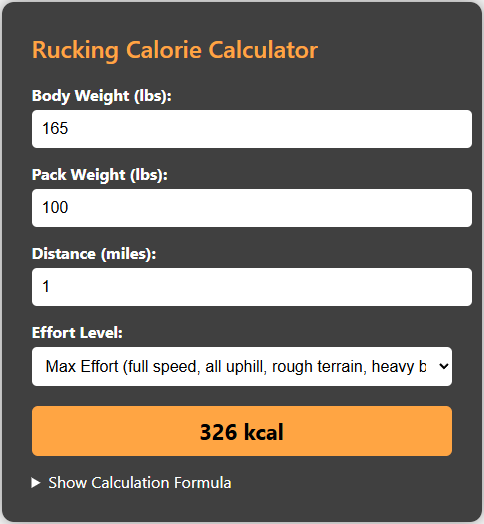
Hills change everything in rucking. The same pace and weight on flat ground produces a different metabolic cost when you add incline, uneven footing, and repeated elevation gain. This guide explains how hills affect calorie burn while rucking and how to use the Rucking Calorie Calculator to estimate effort for weighted vests or loaded backpacks.
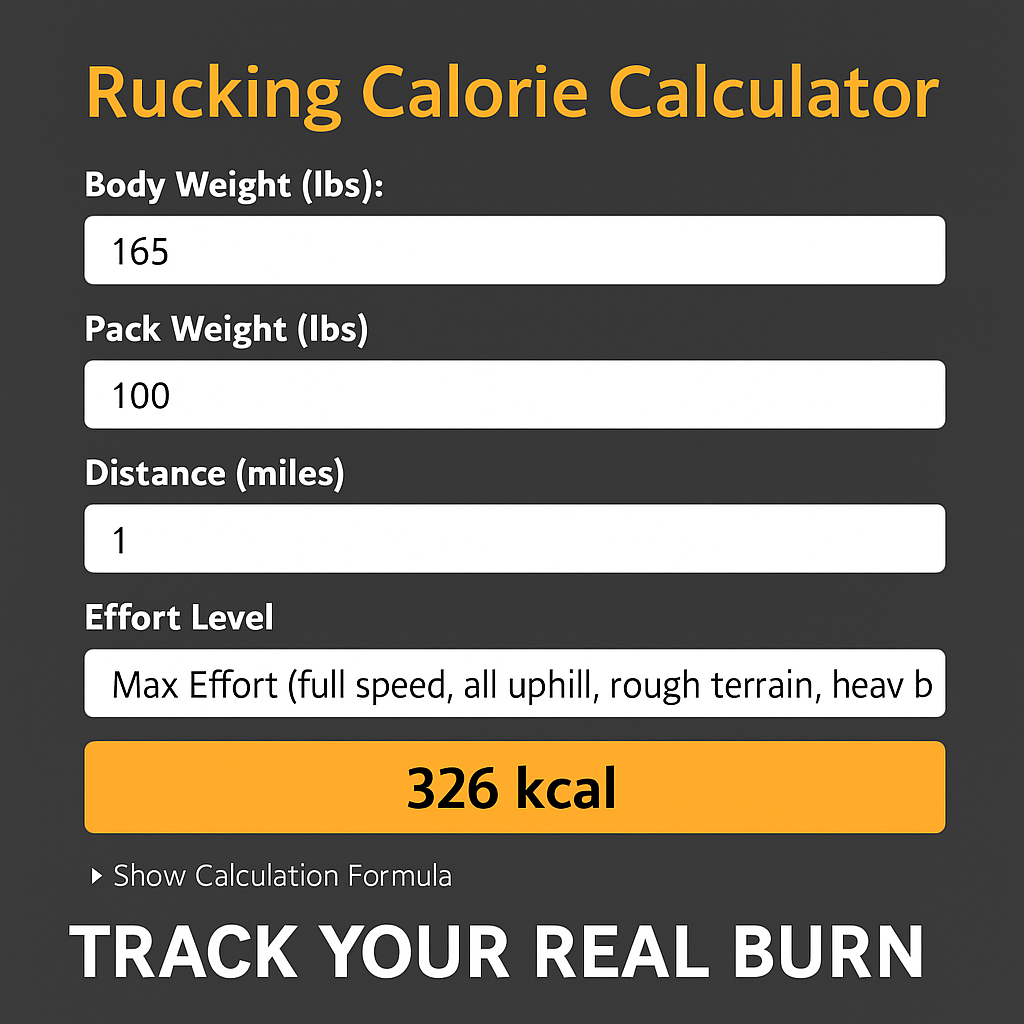
Use the Rucking Calorie Calculator to factor slope, weight, speed, and terrain. Click the screenshot to open the tool and enter your pack or vest weight, pace, and elevation gain.

Practical steps for hill rucks:
Practical steps for hill rucks:
- Adjust pace to perceived exertion when climbing; a comfortable conversational pace on flats will feel hard on a sustained incline.
- Increase the weight input in the calculator to reflect incline effort; even a modest 10 percent increase in metabolic cost can be significant over long climbs.
- Use shorter steps and maintain torso stability to reduce joint stress; drive with the glutes and breathe deliberately.
- Plan breaks and refueling; hills increase glycogen demand so match your nutrition to time under load.
Estimating incline and slope
Percent grade and elevation gain are the two practical inputs I use. Measure a known segment, note elevation change, and compute percent grade. The Rucking Calorie Calculator accepts elevation gain or grade and uses empirically derived multipliers to adjust calorie burn.
Quick rules of thumb:
- Every 100 feet of climbing increases energy cost markedly; multiply flat-ground calories by a realistic grade factor.
- On steep, technical climbs reduce pace and expect lower distance but higher calories per minute.
- Downhill recovers cardiovascular load but increases eccentric muscle work and can still burn substantial calories.
Using the calculator for programming
Plug in typical hikes and test scenarios: a 60 minute ruck with 20 pounds on rolling hills, a 90 minute ruck with repeated climbs, and a heavy vest interval session. The tool helps set targets for weekly calorie expenditure and adjust nutrition and recovery.
Track ruck calories on the go with the Rucking app for Android. It records weighted vest and backpack sessions, offers a weight loss calculator, and links to gear and discounts.

Hydration and gear tips for hills
Hydrate early and use a vest or pack that carries water accessibly. For longer hill efforts consider the CamelBak Motherlode to blend hydration and load. A stable pack reduces oscillation and keeps breathing efficient.

Training progression and safety
Build hill volume gradually. Start with short climbs and lighten load if form breaks down. Monitor knee and low back comfort; eccentric damage from descents shows up later and requires extra recovery.
Actionable example
Estimate calories for a 90 minute ruck, 25 pounds, rolling terrain with 800 feet total elevation gain. Enter the values and compare flat versus hilly scenarios. Use the difference to plan food intake and weekly training load.
Use tools, stay conservative, and measure results. Open the Rucking Calorie Calculator now to test hill scenarios.
Questions? Drop a note or log a session in the app and compare estimates to real burned calories; data beats guesswork.
Common mistakes on hills
People commonly overstride downhill, hold the pack too loose, or ignore pacing uphill. Each mistake increases fatigue and injury risk. Employ short controlled steps and engage core to protect spine.
Shoes and traction matter more on hills. Use lugged soles for wet technical descents, and consider trail shoes instead of road runners for rocky approaches.
Pace strategy for intervals and repeats
For hill repeats treat each climb as a work interval and walk down to recover if necessary. Track effort with the calculator and in the app so you can progress load or time without guessing.
Nutrition for hill rucks
Higher elevation gain increases carbohydrate demand. For sessions over an hour include 20 to 40 grams of carbohydrates per hour as a starting point and adjust based on sweat rate and perceived exertion. Electrolytes and small sodium sources help retain fluid when you sweat heavily.
Recovery nutrition should include protein and carbohydrates soon after a long hill ruck. Prioritize sleep and active recovery the day after intense elevation work.
Monitoring and logging
Record your elevation gain, time, weight, and perceived exertion. Compare calculated calories against app-tracked burn after a few sessions and refine inputs. Over time these comparisons reduce the guesswork and make hill rucks predictable for training or weight loss.
If you want a single number to plan around, run a flat and a hilly simulation in the Rucking Calorie Calculator, average the results, and bias toward the higher value for safety. Start conservative, log data, and increase load only when your form and recovery are solid. Ruck smart, stay outside, and let data lead. Measure, adapt, repeat. Stay safe.