Rucking calorie tracking without smartwatch
Tracking calories burned while rucking without a smartwatch is straightforward if you use the right tools and habits. This guide explains field methods, simple math, and app-based options so you can quantify your work without needing a wrist device.
Practical methods
Start by estimating your baseline calorie burn for walking unloaded, then add a load factor for weight carried. The simplest formula uses bodyweight, pack or vest weight, pace, and distance. For most ruckers a rough rule is that carrying 10 percent to 30 percent of bodyweight increases calorie burn noticeably.
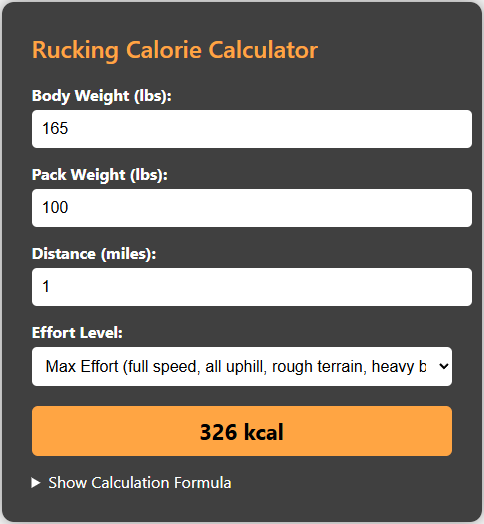
Use the Rucking Calorie Calculator
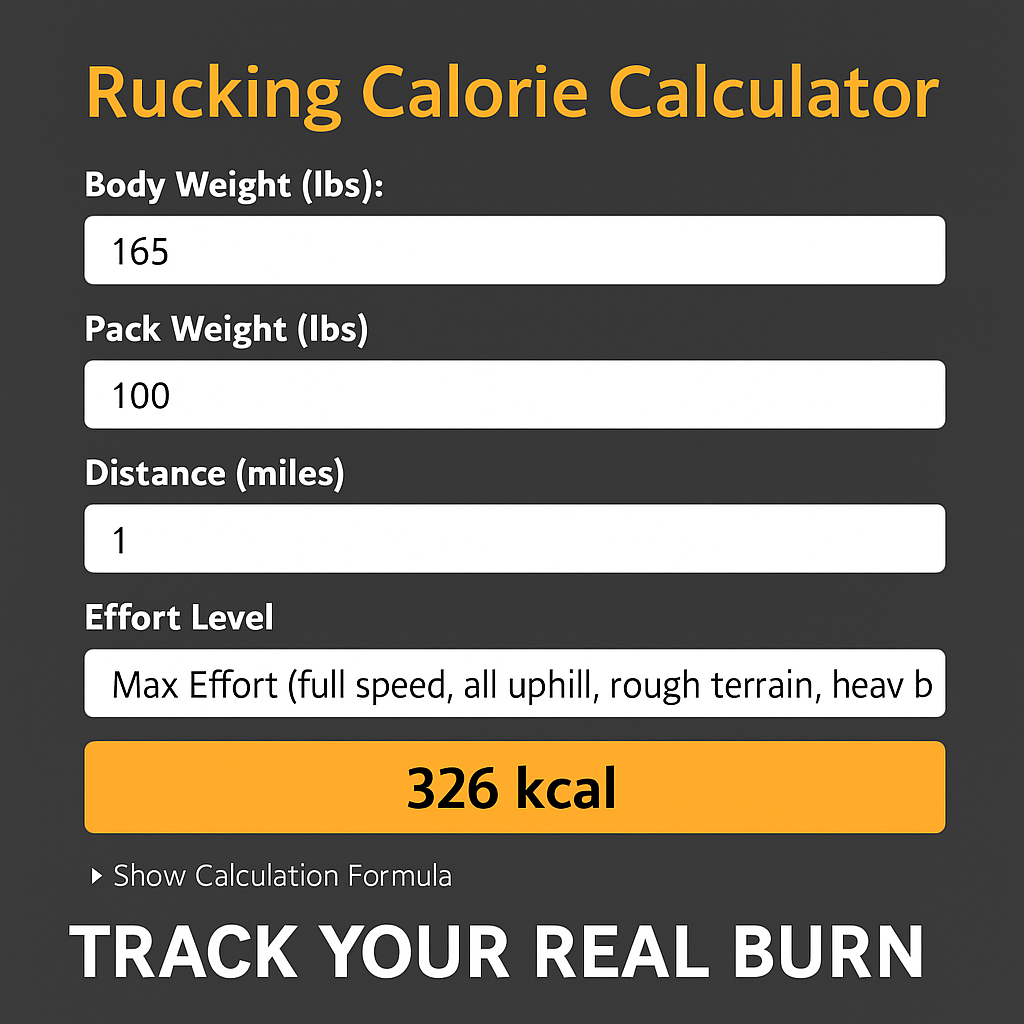
The easiest way to stop guessing is to use the dedicated online calculator. It factors your weight, load, pace, and terrain to give a much better calorie estimate than a generic fitness tracker. Try the rucking calorie calculator for immediate, practical numbers.

Open the calculator and enter your session details.
Rucking app option
If you prefer phone-based tracking the Rucking app on Google Play adds in both rucking and weighted vest options, a built-in weight loss calculator, and session logging so you do not need a smartwatch.

Tap the image to install and track calories for ruck sessions with accurate inputs for weight, distance, and load.
Manual tracking workflow
If you want to keep things low tech, record distance, pace, bodyweight, and load in a notebook or notes app and apply a per mile calorie estimate from the calculator. For example, use the calculator once to get kcal per mile at your weight and load, then multiply by miles each time. That reduces error and keeps the process consistent.
Session notes and heart rate alternatives
Without heart rate you can still add higher fidelity by noting perceived exertion, terrain, and stops. Rate each walk on a 1 to 10 effort scale and adjust your calorie estimate up for hills or heavy packs. Over weeks you will calibrate the multiplier that best reflects your energy expenditure.
Gear that helps without a smartwatch
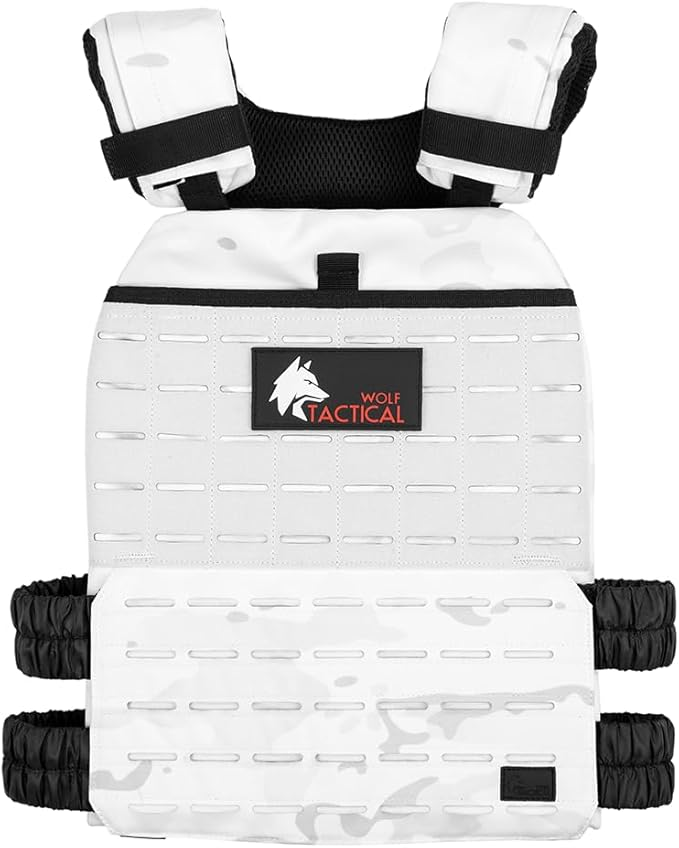
Weighted vests and good ruck packs improve consistency. I recommend a comfortable training vest for beginners and a hydration rucksack for longer efforts.
A reliable choice is the Wolf Tactical Weighted Vest for walking and rucking.

For longer, hydration focused rucks consider the CamelBak Motherlode.

Calibration and consistency
Use the calculator once per typical session, record the kcal per mile or per hour number, and reuse it. Log weather, terrain, and perceived effort alongside distance. Over time you will build a small personal database that replicates smartwatch accuracy without wearing one.
A note about Preston
Preston Shamblen lost 90 lbs through rucking, weighted-vest training, and disciplined nutrition and still recommends using weighted vests to maintain lower body weight and consistent fat burn.
Putting it all together
Rucking calorie tracking without smartwatch is a mix of good inputs and repeated calibration. Use the online calculator as your benchmark, log simple metrics on every session, and optionally use the Rucking app to centralize records without buying hardware. Over weeks you can predict calories within a small margin and train with confidence.
If you want numbers now, click the calculator and enter a recent walk. If you want logs, use a notebook or the app. Accurate tracking starts with consistent inputs, not a fancy watch.
Tips for beginners
- Measure a short trial: 1 mile with your vest or pack, note elapsed time and use the calculator to get kcal. That single data point converts future distance into calories quickly.
- Keep a simple spreadsheet with date, miles, load, and kcal. Over months the average reveals real changes beyond daily noise.
- Use perceived exertion to flag sessions that should be adjusted upward for hills, heat, or pack discomfort.
If you want heavier lifting days, include those sessions separately, because weight training uses different energy systems than consistent ruck walking.
Calibration tip: recheck the online calculator after four typical sessions to account for fitness gains or seasonal gear changes. If your per mile number drifts more than ten percent, update your log and adjust weekly totals. The Rucking app simplifies that by storing session history and offering a weight loss calculator if you are actively cutting. Install it on Android to keep everything on your phone without a smartwatch.
Start today: do a one mile trial, run the numbers in the calculator, log the result, and repeat weekly to build accurate calorie tracking without extra gadgets. Ruck smart, be consistent, and keep the process simple. Train safe, log often.