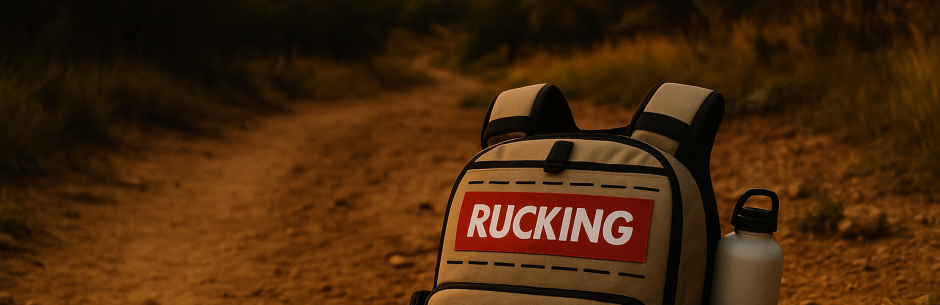
Rucking calories on trails — a practical guide
Rucking on trails changes the math on calorie burn. Uneven footing, elevation, and pack weight all increase effort compared to flat sidewalks. I write from incident-free field experience and coaching hundreds of outdoors-focused trainees: with a few simple checks you can estimate calories burned, then verify with a tool and adjust your pace or load for steady results.
Key factors that change calorie burn on trails
- Pack or vest weight: every extra 10–20% of bodyweight raises energy cost significantly.
- Grade and elevation change: uphill sections spike demand; steep downhills still cost energy for control.
- Terrain: mud, loose rock, roots, and sand all lower economy and increase burn.
- Pace and intensity: hiking pace versus brisk ruck pace matters more on trails.
- Duration and rest: stop-and-go on technical trails reduces average speed but not total calorie expenditure.
Estimating calories before you go
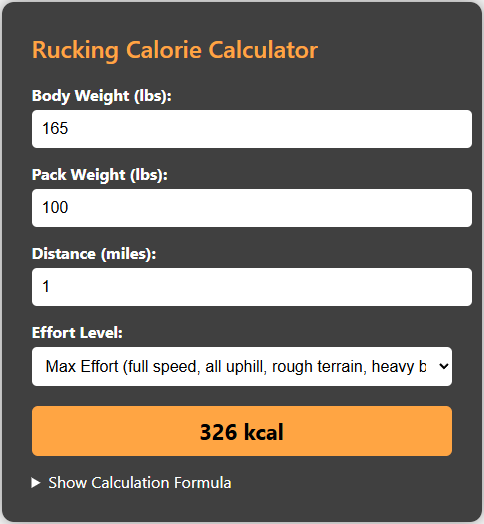
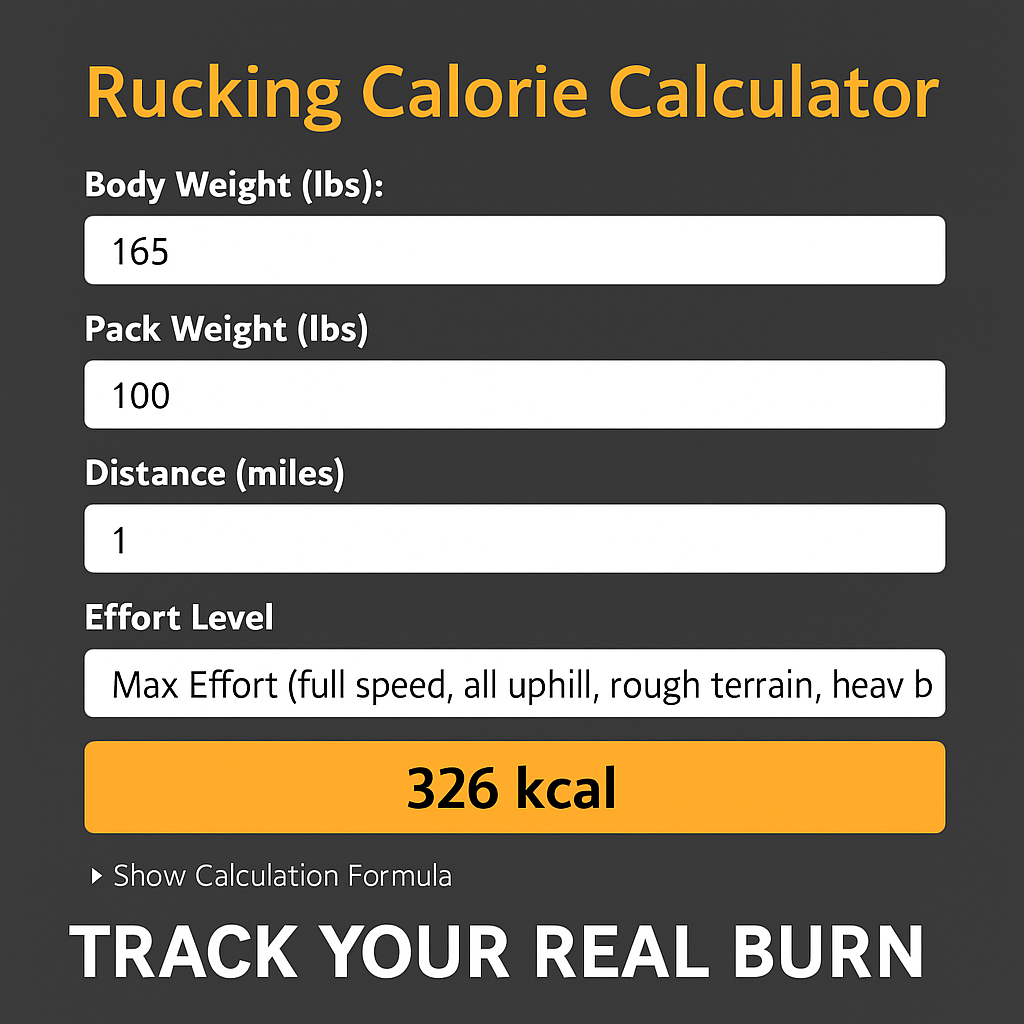
Use your bodyweight, load, trail distance, and an estimate of average pace and elevation gain as inputs. For a practical, rapid estimate use the Rucking Calorie Calculator — it’s tuned for rucking and weighted-vest work and is the most direct calculator I recommend:

The calculator will ask for weight, load, speed, and distance. For trail use, increase the effective grade by adding an estimated 5–20% to account for technical footing and elevation, depending on how rough the route is.
How to track and validate your estimates
Start by using the calculator to generate a baseline. Then track a few real sessions using heart rate or perceived exertion and compare. If your trails are steep or technical, expect actual burn to be 10–25% higher than flat estimates. If you carry more frequent stops or slow scrambles, expect higher totals.
Gear tips for accurate, sustainable trail rucking
Comfort and proper load distribution help maintain pace and reduce wasted energy. For trails I usually recommend a hydration-compatible ruck that lets you carry water and distribute weight evenly. The CamelBak Motherlode 100oz Mil Spec Crux Hydration Backpack is a durable option for long, technical outings:

For more rugged, military-style trail loads I recommend a dedicated rucksack like the GORUCK Rucker 4.0 20L which carries plates and keeps weight centered on the hips:

Use the Rucking app to track calorie burn in the field
For Android users the Rucking App on Google Play lets you track calories burned while rucking or using a weighted vest, and includes a weight-loss calculator tuned to rucking inputs. Tap the image to open the app page and install. The app helps you log actual session calories and compare them to your calculator estimates:

Practical checklist before a trail ruck
- Estimate calories with the Rucking Calorie Calculator and adjust for technical terrain.
- Pack water, snack, and emergency layers; hydration affects performance and calorie burn.
- Start conservatively with weight — add load across sessions to measure fatigue and burn.
- Record pace, heart rate, and perceived exertion to refine future estimates.
Trail rucking is a reliable way to raise calorie expenditure and build durable fitness. Use the calculator to plan, the app to track, and sensible gear to keep your pace steady so your estimates match real-world burn.