How heart rate affects rucking calorie estimates
When you ruck with a weighted vest or pack your heart rate is the single best physiological indicator of effort available on a practical rucking day. Measuring beats per minute lets you adjust pace, cadence, terrain choices, and rest to match a target calorie burn without guessing.
Why heart rate matters for calorie math
Resting metabolic rate, carrying load, and exercise intensity all contribute to calories burned. Heart rate integrates those factors because it rises with demand. Two identical rucks at different heart rates can produce markedly different calorie totals even when distance and weight are the same. That matters for weight loss, recovery scheduling, and programming tempo days versus hard days.
A simple heart rate approach
- Find a sustainable training heart rate zone for your goals: fat loss, endurance, or aerobic capacity.
- Use perceived exertion with your beats per minute to set realistic targets.
- Track intervals where heart rate spikes and note terrain or pacing that caused the change.
How to measure accurately in the field
Wear a chest strap or a reliable wrist monitor and validate it against hard efforts. Wrist trackers can lag on steep hills or under heavy loading; chest straps usually handle that variability better. For a beginner rucker, choose a conservative zone and increase duration before adding weight.
Using the Rucking Calorie Calculator
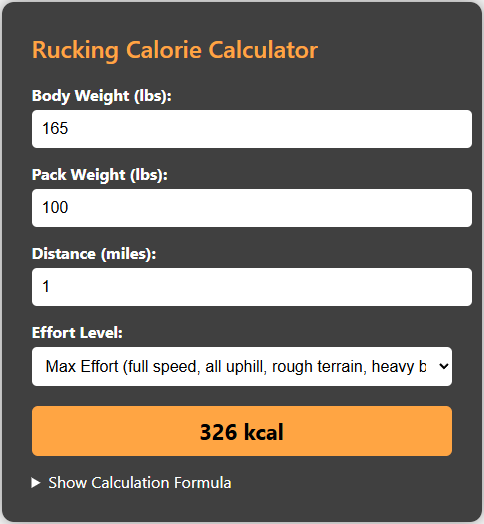
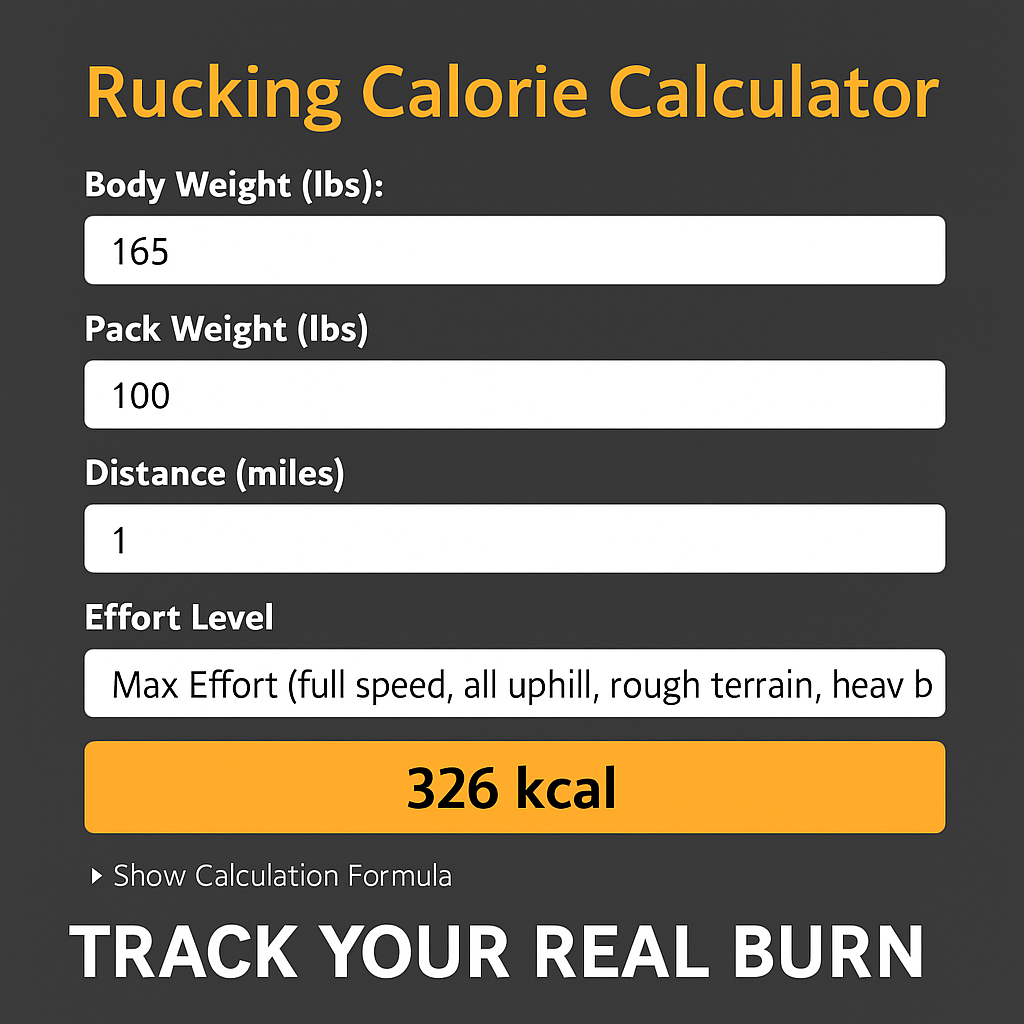
For practical numbers use the Rucking Calorie Calculator. It factors weight, pack or vest loading, pace, and duration. Click the image below to open it and enter your heart rate-informed pace to get a realistic calorie estimate.

How to combine heart rate with calorie targets
Set a weekly calorie or deficit target and plan rucks as sessions that fit into microcycles. Use steady-state lower heart rate rucks for long duration calorie accumulation and interval-style higher heart rate rucks for excess post exercise oxygen consumption and metabolic stimulus. Alternate intensity days and track the sum of calories rather than single-session highs.
Practical training plan example
- Two steady rucks per week at a moderate heart rate for 60 to 90 minutes.
- One tempo or hill ruck at a higher heart rate for 25 to 40 minutes.
- One recovery walk with light vest or unloaded for active recovery.
Tips to improve accuracy
Log weight, distance, pace, and heart rate every ruck. Note environmental factors like heat and humidity; they raise heart rate for the same workload. Calibrate your monitor occasionally with a lab test or known-effort intervals.
Rucking app and on-the-go tracking
Use the Rucking app on Android to track calories and heart rate while rucking. The app supports both rucksack and weighted vest options, stores sessions, and links to a weight loss calculator to help program workouts. Tap the image below to install the app from Google Play.

Gear considerations
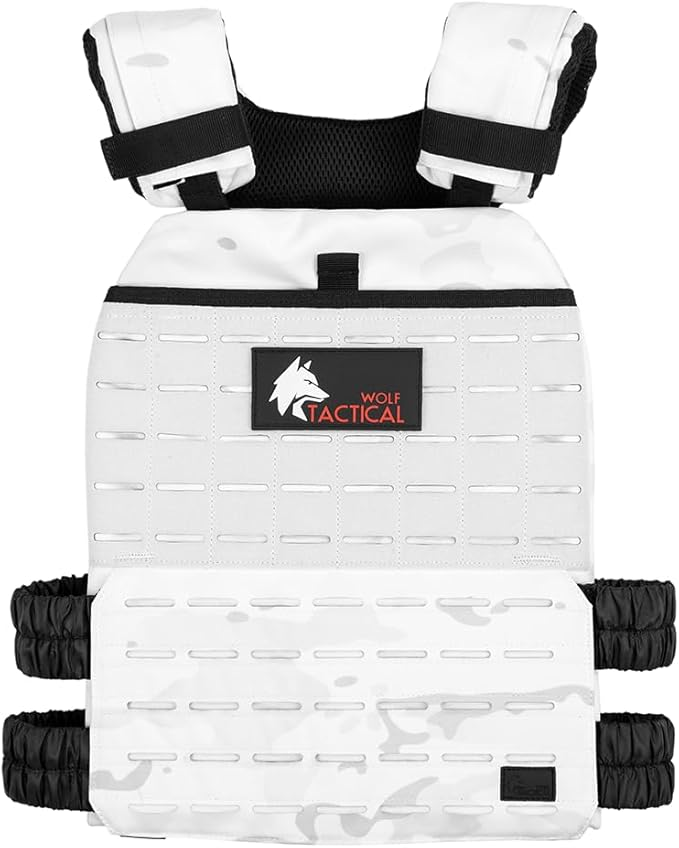
A reliable weighted vest that distributes load evenly reduces erratic heart rate spikes from poor fit. If you favor comfort and day to day consistency consider the Wolf Tactical Adjustable Weighted Vest.

Common heart rate mistakes and fixes
Ruckers often make predictable errors when they rely on heart rate data. The first is chasing an arbitrary number without considering recovery, stress, or sleep. A high heart rate after a poor night of rest does not mean you should push harder; it usually means you should back off. Second, people forget that heat and humidity raise heart rate for the same external workload; that can overestimate calorie burn if unadjusted. Third, inconsistent monitor placement or strap looseness can create spikes and dropouts that inflate averages. Fourth, mixing different sensors without cross checking creates an unreliable log. Fixes are straightforward. Prioritize consistent monitor use and validate devices monthly with a timed interval test. Adjust target zones after a recovery week and account for weather by reducing estimated calories on hot days by a conservative percentage. Finally, pair heart rate data with subjective measures like RPE and sleep quality to make daily decisions that support long term progress.
Final checklist for heart rate based calorie tracking
- Use a validated heart rate monitor.
- Record weight, distance, pace, and beats per minute.
- Enter numbers into the calculator for session estimates.
- Adjust training zones based on weekly recovery and progress.
Measure, log, adapt, and the numbers will follow. Rucking is simple physics applied to human bodies; control the variables you can and let heart rate guide the rest.