Understanding the Ranger 12 Mile Ruck
The Ranger 12 mile ruck is a classic test of endurance, strength, and determination. Completing it is a key phase of U.S. Army Ranger School and a rite of passage for anyone pursuing advanced military fitness. The goal: complete 12 miles while carrying a prescribed load (usually 35 lbs dry weight, plus water, food, and gear) within 3 hours—or less. Success requires not just brute strength, but strategic pacing, efficient load carriage, and advanced preparation.
Essential Gear for the Ranger 12 Mile Ruck
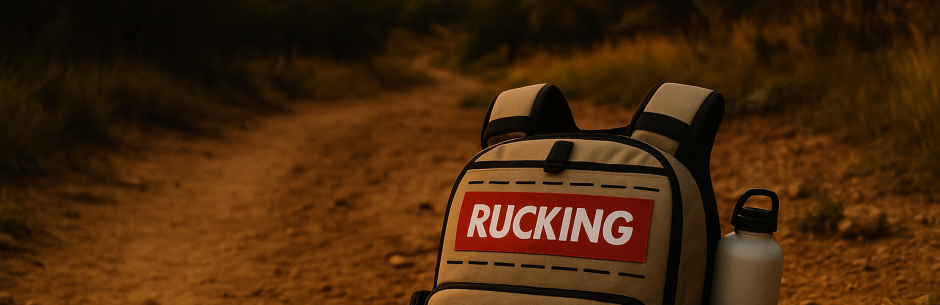
- Weighted Backpack: The right pack must ride close to your back, distribute weight evenly, and stay stable through long distances.
- Hydration System: Hydration is mission-critical during any ruck march. The CamelBak Motherlode 100oz Mil Spec Crux Hydration Backpack is ideal for this kind of challenge. It supports hydration during nonstop efforts and handles variable loads.

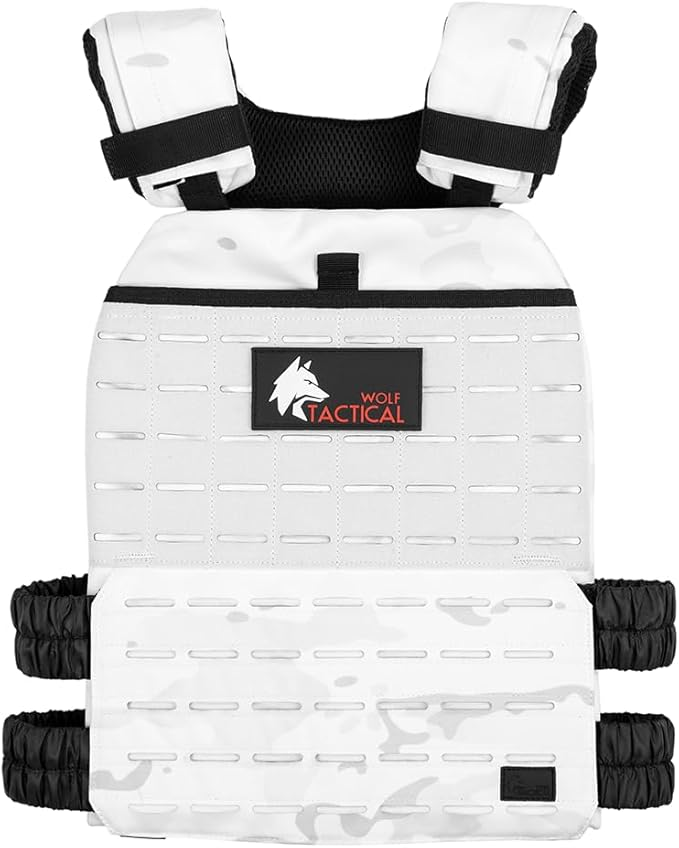
- Weighted Vest: For those seeking more balanced front-back load distribution, or to alternate stimulus between ruck training days, a vest like the Wolf Tactical Adjustable Weighted Vest is another solid option.

Training Approach for the 12 Mile Ruck
Build Your Base
Start with manageable distances (4–6 miles) and gradually add both weight and distance. Emphasize time on feet over speed at first. Aim to ruck 2–3 days per week, working up to 10–12 mile sessions 2–3 weeks out from your test. Rotate between pack and vest training for total adaptation.
Pacing and Footwear
Test your pace frequently. To finish in 3 hours, you need a target pace of about 15 min/mile. Use every practice session to dial in your foot care strategies, sock choices, and lacing methods. Good boots—well worn-in—are absolutely essential.
Load Carriage Tips
- Keep heavy items high and centered on your back.
- Adjust straps so your load doesn’t bounce or sway.
- Practice with the exact gear and clothing you’ll wear for the test.
Nutrition and Hydration
The 12-mile ruck is as much a nutritional effort as a physical one. Hydrate steadily using a high-volume system like the CamelBak Motherlode. Take in electrolytes if conditions are hot or humid. Practice eating simple carbs (energy chews, gels, etc.) during longer training rucks.
Test Yourself
About 2 weeks before the test, complete a rehearsal—gear up, simulate load, and cover the full distance. Assess how your body responds and fine-tune your pace and foot care regime. Don’t skip recovery after this milestone!
Track Your Progress
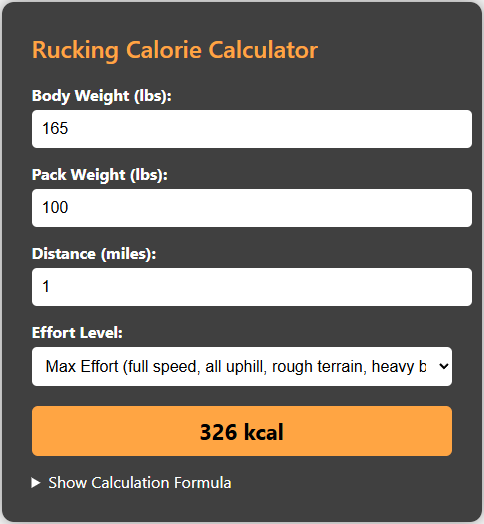
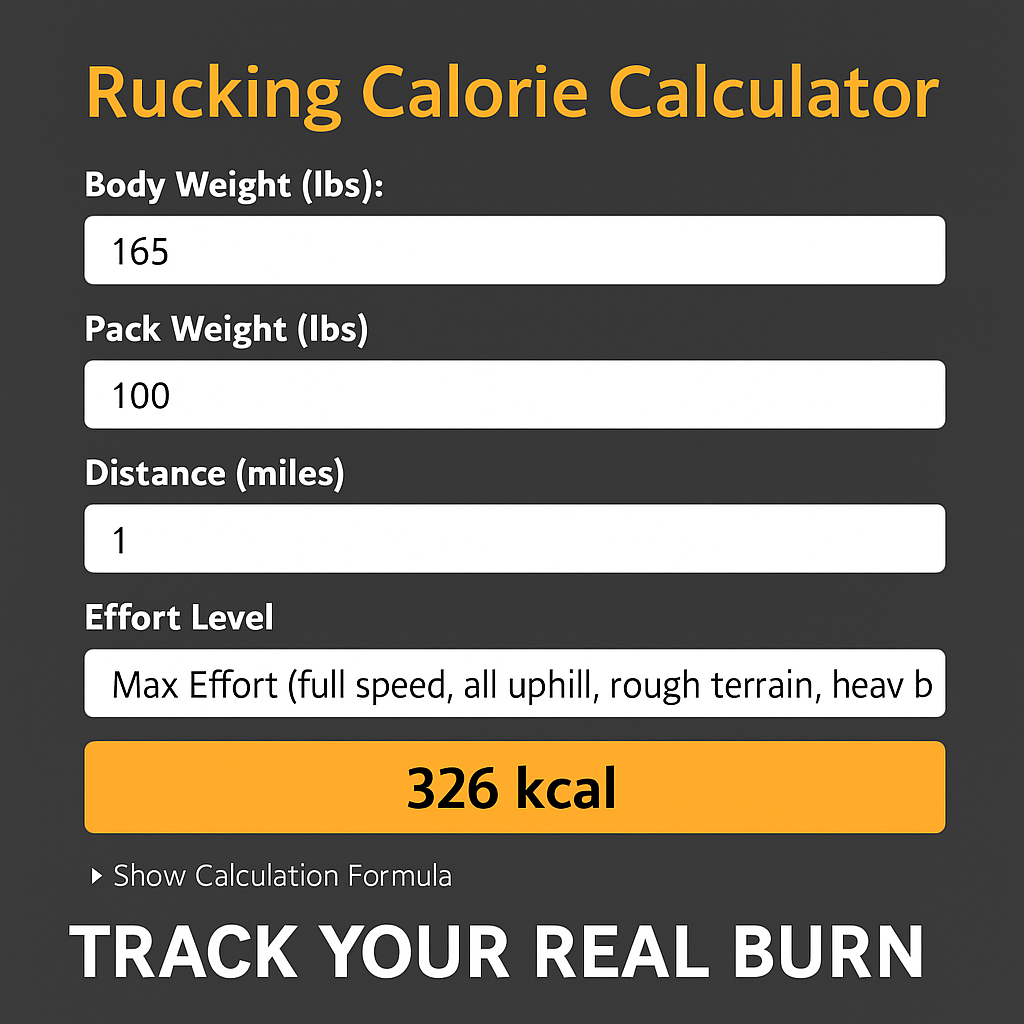
Knowing your calorie expenditure helps you dial in nutrition and pacing. Use the Rucking Calorie Calculator to estimate calories burned during your long rucks and make strategic adjustments.

Final Thoughts
The Ranger 12 mile ruck isn’t just a test—it’s a challenge that develops real-world mental and physical strength. Train consistently and dial-in your equipment, and you’ll be ready to conquer it.