Rucking calories with 50 lb pack: what to expect
Rucking with a fifty pound pack is one of the most efficient ways to increase total energy expenditure without adding complex intervals or long runs. How many calories you burn depends on pace, terrain, body weight, fitness level, and how that 50 lb is carried. This article gives practical ranges, factors that change the math, simple weekly templates, and a reliable calculator to test your own numbers.
Factors that change calorie burn
Pace matters. Faster rucks raise heart rate and cost more calories per minute. Terrain matters — sand, steep trails, and soft surfaces force greater output than flat pavement. Pack fit and distribution change posture and muscular recruitment; a poorly fit pack wastes energy and increases injury risk.
Body weight interacts with external load — a heavier person burns more calories at the same pace, but the percent increase from adding 50 lb is greater for lighter individuals.
Typical calorie ranges
Below are conservative weekly ranges for a healthy adult rucking at a steady pace carrying 50 lb. These assume walking efforts between 3 and 4.5 miles per hour on mostly packed surfaces.
- Light effort (slow walk, easy terrain): 300–500 calories per hour
- Moderate effort (brisk pace, varied terrain): 500–800 calories per hour
- Hard effort (steep trails, loaded marches): 800–1100 calories per hour
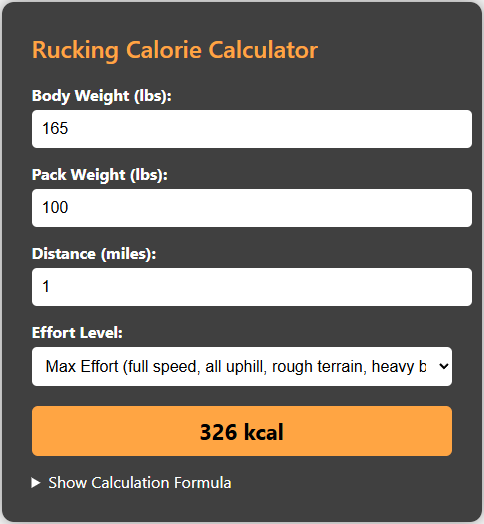
These ranges are broad. To estimate your own burn more accurately use the calculator below and plug in weight, pace, distance, and the 50 lb pack.

Sample field estimate
A 180 pound person rucking 3 miles at a 20 minute per mile pace with 50 lb on packed dirt will burn roughly 600 to 900 calories depending on fitness and terrain. If that same person increases pace or climbs sustained grades the burn can rise above 1,000 calories per hour.
Practical training tips
Start with shorter sessions and prioritize loaded walk mechanics. Keep torso upright, use a steady heel-to-toe gait, and use trekking poles if balance or joint stress is a problem. Build volume gradually: add 10 to 20 percent distance or time per week, and rotate hard days with recovery walks.
For 50 lb loads choose a durable ruck like the GORUCK Rucker 4.0 20L and confirm fit before long rucks.

Recovery and nutrition
Rucking at high loads requires fueling before and after. Prioritize carbohydrates for long sessions and protein to support repair. Hydration matters — carry electrolytes and sip regularly. For long hot days consider Pump-Ocalypse as hydration support.
Track real sessions and get accurate calorie burn estimates with the Rucking app on Google Play; it allows selection of weighted vest or backpack rucking and links to gear and discounts.

Use the calculator
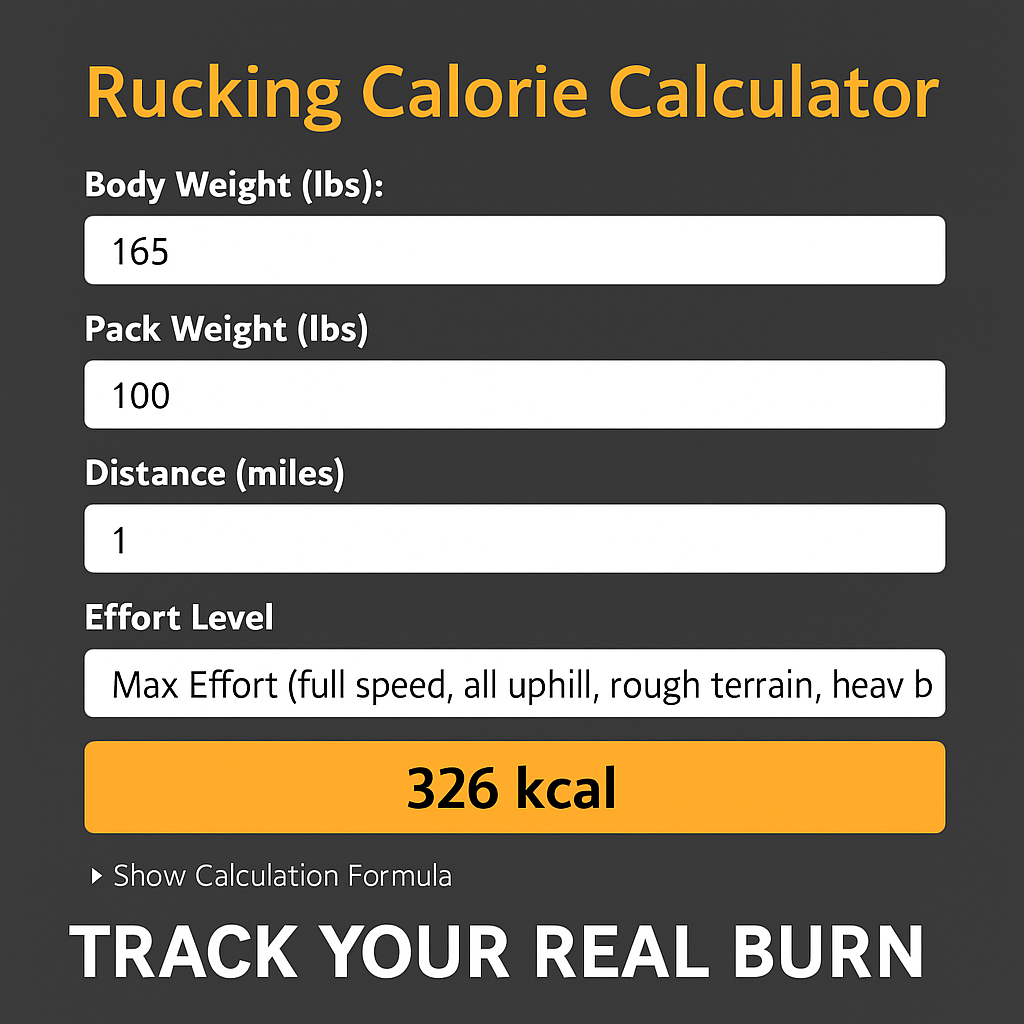
To convert your goals into training sessions open the Rucking Calorie Calculator and enter your bodyweight, pace, distance, and 50 lb pack. The calculator accounts for load and gives per‑hour and per‑mile estimates useful for programming.
Weekly template
Sample week for fat loss and conditioning with a 50 lb pack:
- Monday — Easy 4 mile ruck at conversational pace, focus on posture.
- Wednesday — Tempo 3 mile ruck with rolling hills, faster sections of 10 minutes.
- Saturday — Long ruck 6–10 miles at moderate pace, prioritize hydration and calories.
Adjust distance and load to match recovery and schedule; use the calculator after a few sessions to refine your targets.
Closing note
Rucking fifty pounds is simple in concept and demanding in practice. Measure, plan, and progressively overload while respecting recovery. Use the rucking calculator and the Android app to track realistic calorie burn and keep your training sustainable.
Footwear and load carriage strategies influence efficiency. Choose boots or trail shoes with firm midsoles and a roomy toe box; test them on shakedown rucks before long efforts. Consider soft goods like padded hip belts and sternum straps to move load onto the hips and reduce shoulder strain. When training with heavy external load prioritize joint-friendly progressions, and if you have joint issues consult a clinician before pushing volume. Finally, keep records: note perceived exertion, heart rate, distance, and calories from the app or calculator so you can see trends and adjust.
Practice shakedown rucks to confirm fit before long miles daily.
Record trends weekly and celebrate small but consistent improvements along the way.
Consistent progress with a 50 lb pack comes from measured overload, rest, and honest tracking. Use the tools mentioned, refine the plan, and ruck outdoors regularly for best long term results. Train hard, recover.