Rucking calories on sand: what changes and how to estimate burn
Rucking on sand changes the math. Softer surfaces increase energy cost, slow pace, and shift strain to stabilizers in the hips and ankles. If you’ve tracked calories on pavement, expect a noticeable uptick on sand — commonly 15–40% higher depending on firmness, load, and speed. Practical testing and a simple calculator will get you a usable number for planning food, hydration, and recovery.
Why sand eats extra calories
- Surface firmness: loose, deep sand requires more force every step.
- Load: every pound in a vest or pack increases the penalty.
- Pace and gait: slower speeds can still burn more because muscles work harder.
- Terrain features: dunes, slopes, and wind multiply effort.
- Heat and exposure: higher core temperature changes perceived effort and hydration needs.
A practical field rule: add about 15% for firm packed sand, 25% for mixed sand, and 35% or more for deep, shifting sand. Then add the expected increase for any weighted vest or rucksack load — for example a vest at 10–20% of bodyweight will raise baseline burn significantly. These are starting points; individual differences and route specifics will alter the final number.
Technique, pacing, and hydration tips
- Shorten stride and raise cadence to reduce braking and preserve energy.
- Use a midfoot strike and engage the hips and core for stability on loose sand.
- Break long sand sections into timed intervals to manage effort and avoid overheating.
- Bring extra fluids and electrolytes: higher output and sun exposure speed dehydration.
For long sandy rucks I favor a hydration system that carries both water and gear. The CamelBak Motherlode 100oz is a reliable choice for extended routes because it keeps hydration accessible and leaves room for essentials.

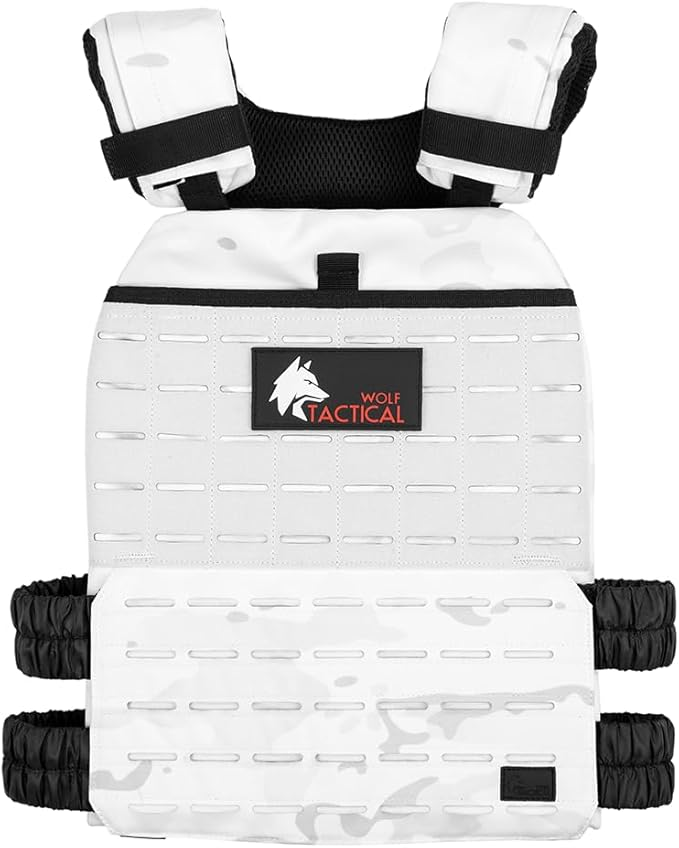
When you use a weighted vest on sand, prioritize a low-bounce, comfortable fit to prevent chafing and energy-wasting movement. For comfort-focused builds that handle long walking rucks, the WOLF TACTICAL Simple Weighted Vest is a durable, breathable option well suited for sand.

Use the Rucking calorie calculator to refine estimates
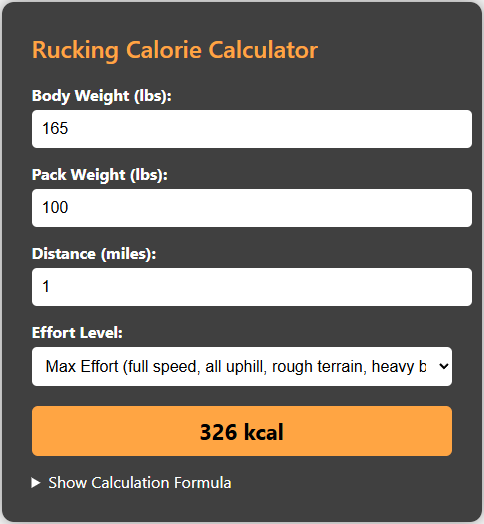
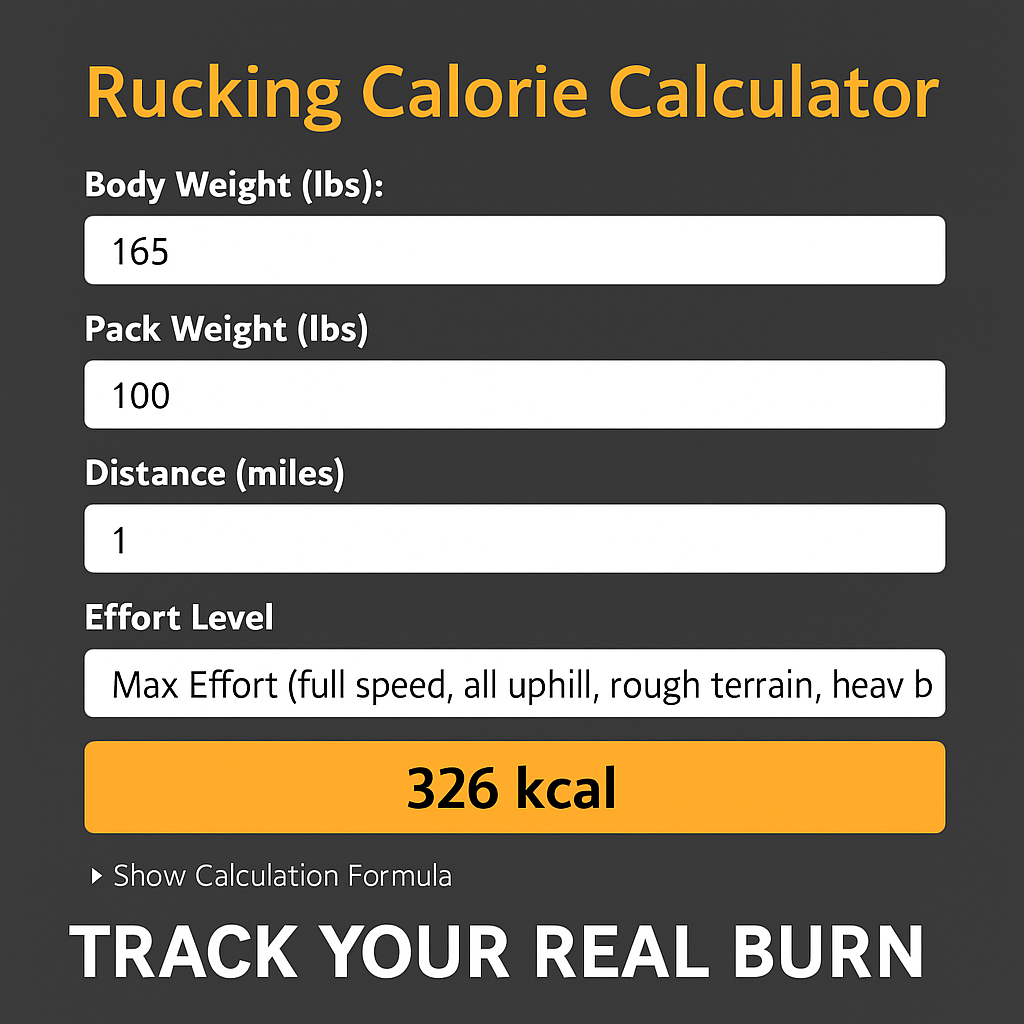
For an evidence-backed field estimate, use the Rucking Calorie Calculator. Enter bodyweight, load, pace, and terrain and then apply a sand modifier based on firmness. Click the screenshot below to open the tool and get a practical number you can trust.

Start with the calculator’s baseline for walking with a pack, then apply a terrain multiplier for sand if needed. Record several sessions on different sand types to establish your personal multiplier — this transforms one-off guesses into consistent planning data.
Track on the go with the Rucking app
Track workouts and calorie estimates with the Rucking app on Google Play. The app accurately tracks calories burned while rucking or using a weighted vest, includes a weight loss calculator, and links to gear and discounts to make planning simpler.

Field checklist before a sand ruck
- Plan for 15–35% higher burn versus pavement, then adjust by feel.
- Carry more water and electrolytes than you would on firm ground.
- Choose a snug, low-bounce vest or a secure rucksack setup.
- Log sessions and stabilize your personal sand multiplier for future planning.
Rucking on sand is an efficient, high-return conditioning method when approached with respect for terrain and load. Use a calculator, track outcomes, and favor gear that protects hydration and reduces unnecessary movement. With a few test sessions you’ll have a reliable plan for calories, pacing, and recovery on any sandy route.