How to track rucking calories accurately
Tracking calories burned while rucking is straightforward when you use consistent inputs and a repeatable method. Rucking adds load and changes energy cost compared to walking. To track accurately you need body weight, pack or vest weight, distance, pace, terrain, and a reliable calculator or app. This article walks through practical steps and tools I use outdoors to make estimates reliable and repeatable.
Core steps for accurate tracking
- Weigh yourself and your load before each session. Body weight fluctuations change calorie math.
- Measure distance and pace with GPS or an app so speed and time are recorded.
- Log terrain and hills—elevation increases calorie cost significantly.
- Use a validated calculator and periodically compare estimates to perceived exertion and heart-rate data.
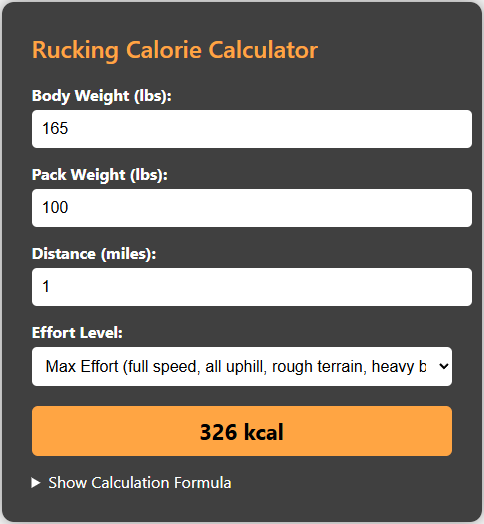
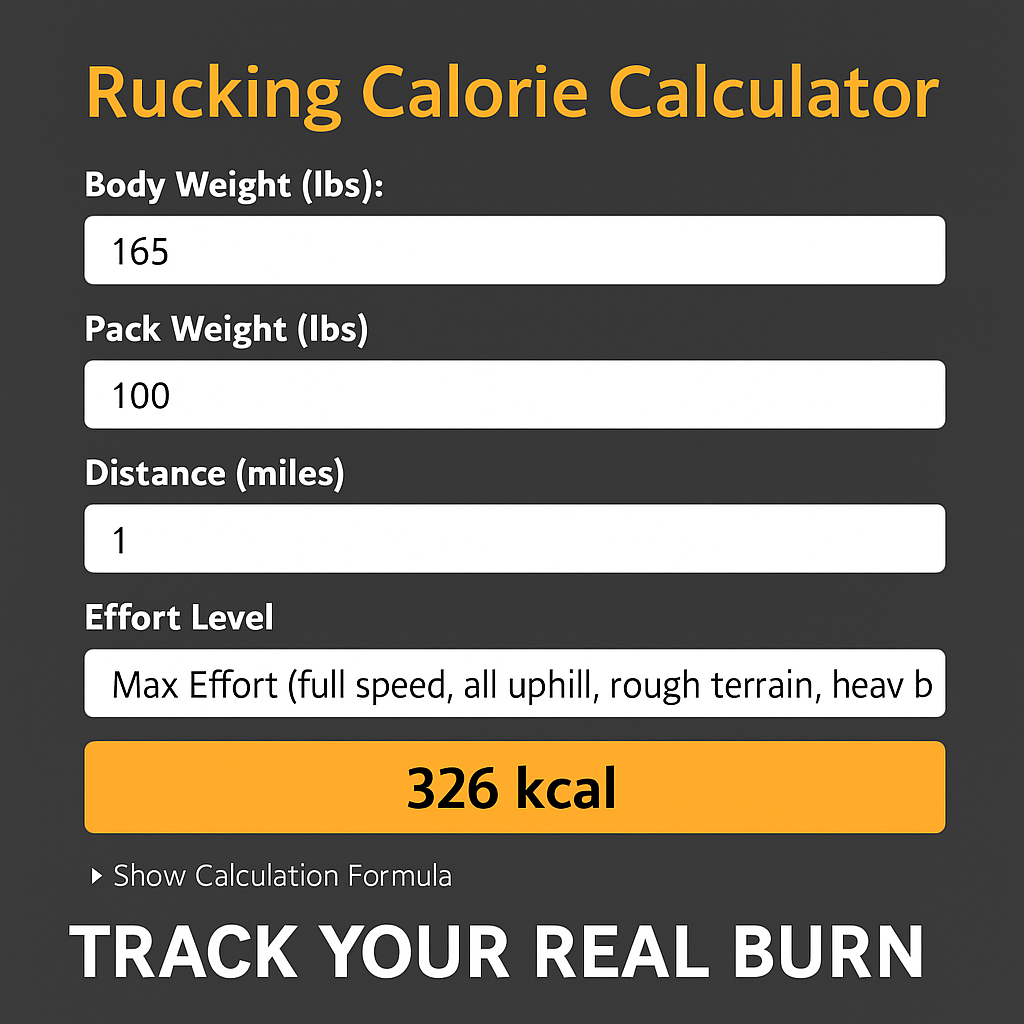
For an immediate estimate, use the Rucking calorie calculator below. It factors body weight and load to produce a practical calorie burn number based on distance and pace. Click the screenshot to open the tool and run a quick calculation before or after a ruck.

Use the Rucking app for ongoing tracking
For day-to-day tracking, install the Android Rucking app. The app lets you track calories burned while rucking or using a weighted vest, save sessions, and compare results over weeks. Tap the image below to open the app on Google Play. It’s a practical way to consolidate weight, distance, and pace into consistent logs.

Fine-tuning accuracy
Once you have baseline numbers from the calculator and app, refine your approach:
- Calibrate by doing repeat routes with the same load; compare weekday to weekend results.
- Consider heart-rate patterns—higher average HR implies higher actual caloric cost than a flat estimate.
- Adjust for weather and trail conditions; muddy, hot, or windy conditions increase expenditure.
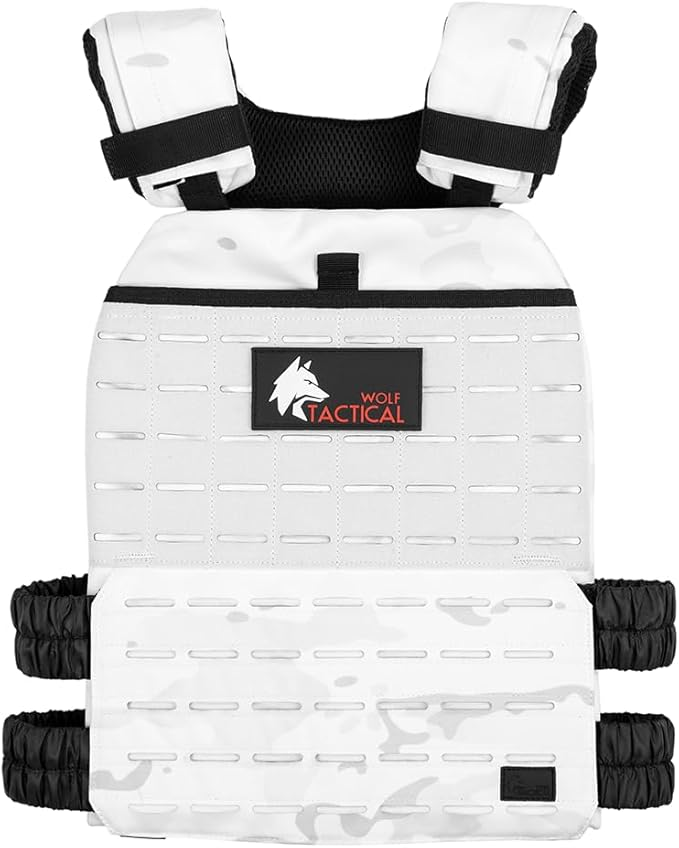
Weighted vests and pack systems can change posture and gait. For consistent tracking choose one method—either a vest or a rucksack—and stick with it while you log. If you favor a comfortable, adjustable vest for frequent walks and accurate repeated loads, consider the Wolf Tactical Adjustable Weighted Vest linked below; it helps keep load placement consistent so your calorie estimates remain reliable.

Practical logging tips
- Keep a simple spreadsheet or use the app to record: date, body weight, vest or pack weight, distance, time, and notes on terrain.
- Review weekly averages rather than single-session numbers to reduce noise from one-off variables.
- Use the calculator for planning and the app for session logging—together they create a consistent dataset you can rely on.
Consistent inputs and simple validation walks are the keys to accuracy. Use the calculator link above for instant estimates and the Rucking app for long-term tracking of calories burned while rucking or using a weighted vest.